Erasmus+Projekt "Technology - key to our future"
Erasmus+ akkreditierte Schule seit 2022
Schachbrett Title Example
Teacher trainings im Rahmen der Akkreditierung
Wir empfangen regelmäßig Gäste (Lehrpersonen) aus anderen Ländern, wie z.B. Spanien, Italien,... .
Erasmus+ Projekt
Schachbrett Title Example
Projektablauf
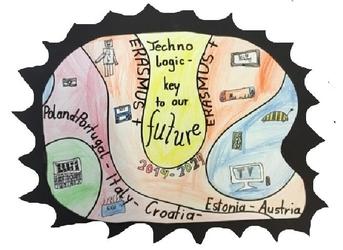
Techno logic key to our future
... ist eine strategische Partnerschaft im Programm Erasmus+ Schulbildung (KA2).
- Beteiligte Länder
... Polen (Leadpartner), Italien, Estonia, Portugal (Madeira), Kroatien, Österreich (VS Karl Löwe Gasse)
- Informationen über das Projekt
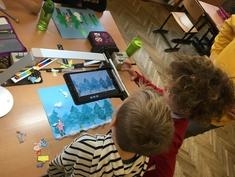
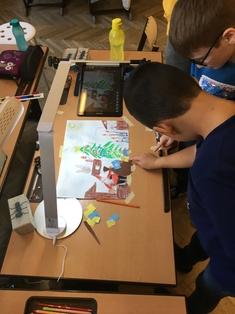
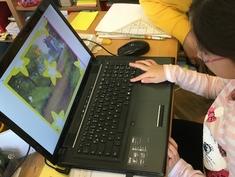
Computers, tablets, smartphones are inherent elements of modern children. They can be use for different purposes not only for playing. They can teach logical thinking, creativity, strategy, planning or endeavour to attain the purpose. Teamwork and ability to solving problems are very importat as well. Porogramming gives a chance for creating new worlds, teaches detecting rules and relationships, succeed at aims in different ways. Programming includes also an array of universal rules. Children can learn them by playing with and without computers. English is nesesery for comunication and to work in the international team. All those key competences are essential in everyday and proffesional life. That's why it is very important to develop them from the very begining of eduaction. Our project will change the way of thinkig, realize a need of foreign languages knowledge and ICT, will teach self-reliance in decision-making and effective teamwork. Students will learn respect for other, different people.
- Ziele
- developing computational thinking
- developing creativity, patience and perseverance, integrity,
- acquisition of new ICT skills - graphic and audio programs
- developing language competences (learning the ITC vocabulary in English)
- Arbeitsprozess
Each school will choose one person responsible for eTwinning cooperation. A group of students will be chosen in each school. National sudents' groups will work internationaly. We are going to use eTwinning at least once a month to update all projects activities.
- Erwartete Ergebnisse
We expect that our students and teachers will become more skillful with new technologies. They will be able to use graphic programs, create simple robots and solve different technical Problems.
Donauwelle Plus
... ist ein Mobilitätsprojekt für Lehrpersonen und Schulleiter/innen im Programm Erasmus+ Schulbildung (KA1).
Ein Blick in die finale Publikation zu dem Projekt unter
https://drive.google.com/file/d/1L6mdifQsivTtJu2Hin51_zP7EXQ9fPhL/view?usp=sharing lohnt sich!
Projektpartner:
- Bildungsdirektion für Wien / Begabungsförderungszentrum
- VS 1030 Wien, Eslarngasse 23
- pVS 1100 Wien, Ludwig-von-Höhnel-Gasse 17-19
- VS 1120 Wien, Karl Löwe Gasse 20
- VS 1120 Wien, Rothenburgstraße 1
- VS 1170 Wien, Knollgasse 4
Projektdauer:
- September 2018 - August 2021 / Verlängerung wegen Pandemie
Kurzbeschreibung des Projektes:
Vereinbarte Zielsetzung des Erasmus-Projektes "Donauwelle Plus" ist die Auseinandersetzung mit Umsetzungsmöglichkeiten der Begabungsförderung in ausgewählten Schulen in Deutschland, in den Städten Berlin und Hamburg. Um den Grundsätzen der begabungsfördernden Ausrichtung des Unterrichts im Sinne der Differenzierung und Individualisierung noch besser entsprechen zu können, bedarf es des Einblicks in erfolgreiche Lehr- und Lernarrangements im internationalen Kontext. Der Einblick und damit einhergehende Austausch über Realisierungsmöglichkeiten zur Thematik des begabungsfördernden Schulsettings ist eine Notwendigkeit der Schulentwicklung. Entwicklungsfördernde und lernunterstützende Umgebungen sollen geschaffen und im Sinne der Chancengerechtigkeit an einer hohen Zahl an Standorten implementiert werden.
Den gesetzlichen Auftrag der Begabungsförderung für alle Schüler/innen gilt es an österreichischen Schulen zu intensivieren. Einblicke im Rahmen von Kursen und Job-Shadowing an deutschen Schulstandorten stellen eine Basis und Chance der Bereicherung und des Austausches dar. Neben den Einblicken betreffend begabungsfördernder Rahmenstrukturen an Schulstandorten, soll die Teilnahme an internationalen Fortbildungen zum Themenfeld der Begabungsförderung eine Wissenserweiterung basiert auf dem Input von weltweit anerkannten Expert/innen ermöglichen. In weiterer Folge gilt es begabungsfördernde Angebote im Sinne der Chancengerechtigkeit und der Inklusion an den Schulen in Wien als fach- und akteursübergreifende Querschnittsaufgabe zu stärken.
... ist ein Mobilitätsprojekt für Lehrpersonen und Schulleiter/innen im Programm Erasmus+ Schulbildung (KA1).
Ein Blick in die finale Publikation zu dem Projekt unter https://drive.google.com/file/d/1L6mdifQsivTtJu2Hin51_zP7EXQ9fPhL/view?usp=sharing lohnt sich!
Projektpartner:
- Bildungsdirektion für Wien / Begabungsförderungszentrum
- VS 1030 Wien, Eslarngasse 23
- pVS 1100 Wien, Ludwig-von-Höhnel-Gasse 17-19
- VS 1120 Wien, Karl Löwe Gasse 20
- VS 1120 Wien, Rothenburgstraße 1
- VS 1170 Wien, Knollgasse 4
Projektdauer:
- September 2018 - August 2021 / Verlängerung wegen Pandemie
Kurzbeschreibung des Projektes:
Vereinbarte Zielsetzung des Erasmus-Projektes "Donauwelle Plus" ist die Auseinandersetzung mit Umsetzungsmöglichkeiten der Begabungsförderung in ausgewählten Schulen in Deutschland, in den Städten Berlin und Hamburg. Um den Grundsätzen der begabungsfördernden Ausrichtung des Unterrichts im Sinne der Differenzierung und Individualisierung noch besser entsprechen zu können, bedarf es des Einblicks in erfolgreiche Lehr- und Lernarrangements im internationalen Kontext. Der Einblick und damit einhergehende Austausch über Realisierungsmöglichkeiten zur Thematik des begabungsfördernden Schulsettings ist eine Notwendigkeit der Schulentwicklung. Entwicklungsfördernde und lernunterstützende Umgebungen sollen geschaffen und im Sinne der Chancengerechtigkeit an einer hohen Zahl an Standorten implementiert werden.
Den gesetzlichen Auftrag der Begabungsförderung für alle Schüler/innen gilt es an österreichischen Schulen zu intensivieren. Einblicke im Rahmen von Kursen und Job-Shadowing an deutschen Schulstandorten stellen eine Basis und Chance der Bereicherung und des Austausches dar. Neben den Einblicken betreffend begabungsfördernder Rahmenstrukturen an Schulstandorten, soll die Teilnahme an internationalen Fortbildungen zum Themenfeld der Begabungsförderung eine Wissenserweiterung basiert auf dem Input von weltweit anerkannten Expert/innen ermöglichen. In weiterer Folge gilt es begabungsfördernde Angebote im Sinne der Chancengerechtigkeit und der Inklusion an den Schulen in Wien als fach- und akteursübergreifende Querschnittsaufgabe zu stärken.
European Graphic Novels "What´s your story"

... war eine strategische Partnerschaft im Programm Erasmus+ Schulbildung.
Die Publikation zum Projekt ist unter anyflip.com/meixs/yoem abrufbar!
Projektpartner:
- Österreich/Wien:Stadtschulrat für Wien - ZIS 2, Holzhausergasse - VS 12, Karl Löwe Gasse - PH Wien 10
- University of Modena and Reggio; Italien, Modena
- Escola Vida Montserrat; Spanien, Barcelona
- CoED Foundation; UK, Birmingham
- Max-Born-Berufskolleg Recklinghausen, Deutschland
- MCAST Institute for the Creative Arts; Malta, Paol
- IsArt – Liceo Artistico “Arcangeli” Bologna, Italien
Projektdauer:
- September 2017 - Februar 2020
Kurzbeschreibung des Projektes:
The project concentrates on the promotion of social inclusion in the educational environment, via an innovative artistic-aesthetic approach. The project aims to integrate pupils from minorities and vulnerable groups in school, and other educational establishments. The interaction of artists, educators, teachers, university lecturers and therapists, and people with refugee experiences, is handled strategically, and specifically by the art form of the “graphic novel”. In the challenge of accelerated social change, increasing immigration and refugee movement on the one hand and by the attested potential of cultural, aesthetic education with regard to transculturally oriented teaching will highlight the importance of new educational aspects and open up ways for teaching development.
The selection of priorities is based on two agreements, the social strategy “Europe 2020” and the European Agenda for Culture 2007 of the European Commission.
- The Europe 2020 strategy for smart, sustainable and inclusive growth sets targets to lift at least 20 million people out of poverty and social exclusion and to decrease rates of early school leavers below 10% and at least 40% of people aged 30–34 having completed higher education.
- European Agenda for Culture (2007/C 287/01) convinced that culture and its specificity, including multilingualism are key elements of the European integration process based on common values and a common heritage — a process which recognizes, respects and promotes cultural diversity and the transversal role of culture.
Culture and creativity are important drivers for personal development, social cohesion, economic growth, creation of jobs, innovation and competitiveness.
The project wants to test a new, pluralistic linguistic concept of an approach for social inclusion, on the example of educational innovation. This approach should be the preparation for a comprehensive representation of “Europe in an educational context”, through its implementation as a “graphic novel”.
The focus is on the activation of cultural and creative educational approaches, whose transnational mobilisation, and the distribution of access in the European Union, and reaching the target group, with a particular focus on people with disadvantages, and underrepresented groups regarding their social, plural potential.
The output of the project is on the one hand a guideline – the “Compendium of Implementation”, and on the other hand a booklet – a graphic novel, the “Europe Graphic Novel”. The “Compendium” is a guide to the implementation of social inclusion, oriented towards the example of teaching and learning behaviour, for the example of the graphic novel. The aim is to create a „theoretical foundation“ as transfer material, to prepare for teaching sequences from school and further education. The “Europe Graphic Novel” is a tutorial on how to develop a graphic novel, which will be created with pupils in the practical part, and encompasses the points of “Regional Stories” (stories about social inclusion from the regions) and the “European Context” (a joint parable on the topic of “Europe as an allegory of collectives and plurals”).
The guideline and the booklet should be the basis for a future projection, for a Europe-wide project “Education PluralEurope2025”.